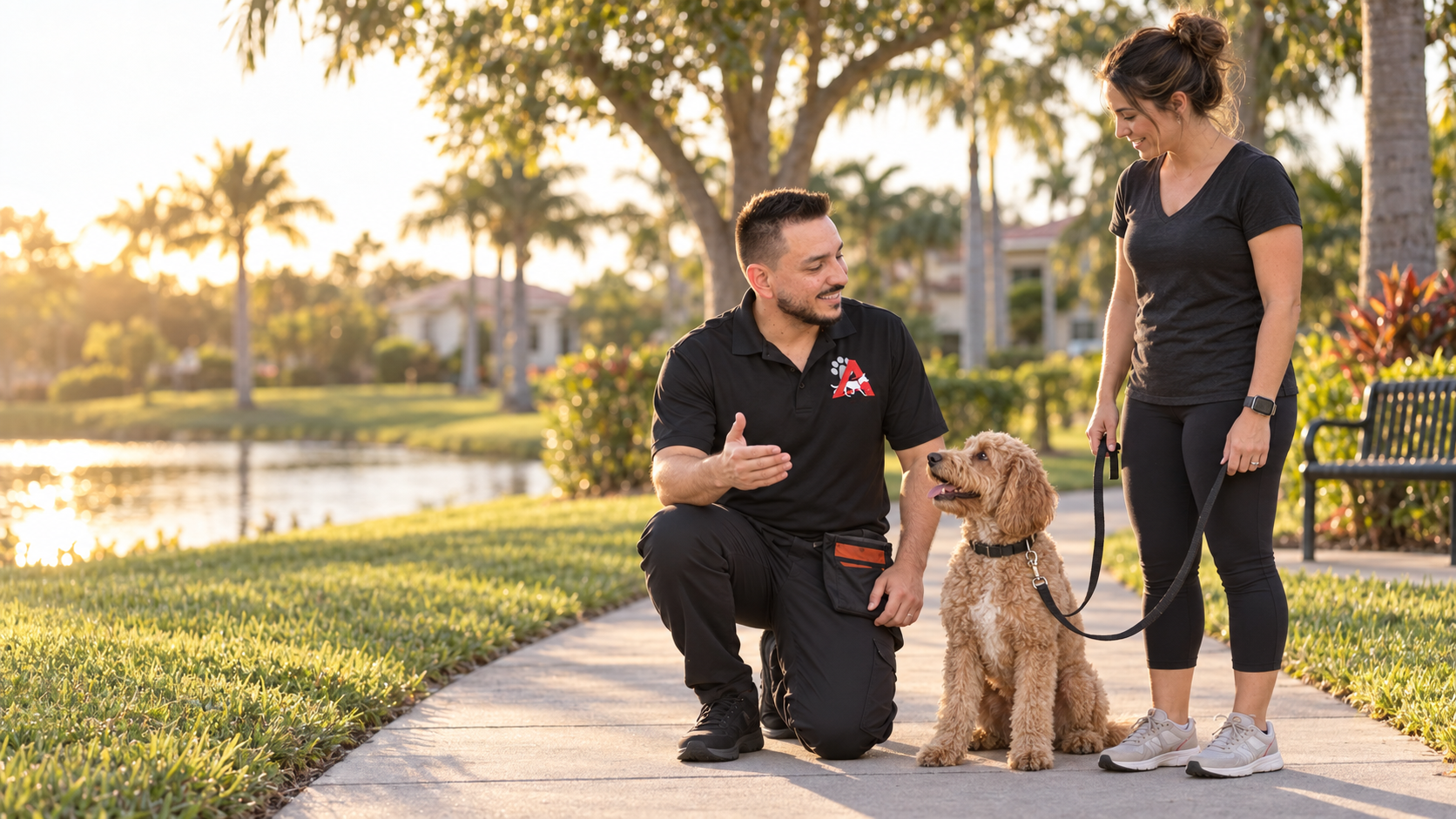
A well-trained dog is not simply a dog that knows how to sit, stay, or come when called. It is a dog that has learned how to live successfully with its family—and a family that understands how to communicate clearly and confidently with their dog.
Welcome to the Abello’s Dog Training blog. This space was created to share practical guidance, helpful training resources, recommended tools, and honest conversations about what it takes to build better behavior and a stronger relationship with your dog.
Training Should Strengthen the Relationship
My name is Juan José Abello, founder and head trainer of Abello’s Dog Training.
My journey as a trainer began with a genuine love and empathy for animals, particularly dogs that needed someone to understand them. My time volunteering with shelter dogs—and experiences with dogs like Susy—helped shape the trainer I eventually became.
I graduated from Animal Behavior College in 2014. Since then, I have worked with different dogs, behaviors, environments, and families. Those experiences have taught me that every dog is different, confidence cannot be forced, communication must be clear, and lasting progress requires patience and consistency.
They also taught me something equally important: successful dog training is not only about changing the dog. It is also about educating and supporting the owner.
More Than Teaching Commands
Commands are important, but they are only part of the picture.
A dog may know SIT inside the living room but struggle to respond in the backyard. A dog may walk calmly on a quiet street but become overwhelmed in a busy shopping plaza. A dog may understand PLACE during a training session but have difficulty settling when visitors arrive.
That does not necessarily mean the dog is being stubborn or intentionally disobedient. It may mean the skill has not yet been practiced in that environment, around that level of distraction, or with enough consistency.
At Abello’s Dog Training, obedience is used as a tool to build something greater:
- Better communication
- Increased confidence
- Stronger self-control
- More predictable household routines
- A healthier relationship between the dog and family
- Skills that can be used in everyday life
The goal is not to create a dog that performs only when the trainer is present. The goal is to help owners understand how to guide, reinforce, and communicate with their dogs independently.
The Abello Method™
The Abello Method™ is built around six principles.
1. Relationship Before Commands
Trust and communication come before expecting reliable performance. Training should help dogs and their owners understand one another more clearly.
2. Calm Mind, Clear Communication
Training is more productive when we begin from a calm and intentional state of mind. Frustration, rushing, and repeatedly correcting mistakes can make communication more difficult.
Calm first. Communicate second. Teach third.
3. Train for Real Life
Dogs need skills that work where life actually happens: at home, in the neighborhood, around visitors, at parks, in stores, while traveling, and in other appropriate public environments.
4. Learning Through Experience
Dogs do not build confidence by remaining in the same environment forever. Thoughtful exposure to new surfaces, sounds, people, places, and challenges can help dogs become more adaptable.
Exposure should be progressive and appropriate for the individual dog. The objective is to build confidence—not force interaction.
5. Make Training Enjoyable
Training should not feel like a constant struggle. Food, praise, play, movement, freedom, affection, and environmental access can all become meaningful rewards.
When training is enjoyable, families are more likely to practice. Consistent practice is what helps new skills become everyday habits.
6. Educate the Owner
My goal is not to make families permanently dependent on a trainer. I want owners to understand why a strategy is being used, when to use it, and how to adapt it to new situations.
I do not just train dogs. I educate owners.
Progress, Not Perfection
Dog training is rarely a perfectly straight line.
There will be successful days, difficult days, distractions, mistakes, and moments when your dog surprises you. Those moments are part of the process.
Rather than expecting perfection, look for progress:
- Your dog checks in with you more often during a walk.
- Your dog settles a little faster when someone enters the home.
- You recognize the signs that your dog is becoming overwhelmed.
- You remember to reward a calm decision before a problem begins.
- Your family becomes more consistent with expectations and routines.
Small improvements can eventually become reliable habits.
What You Will Find Here
This blog will provide practical education on topics such as:
- Puppy training
- Obedience and household manners
- Leash walking
- Recall and controlled freedom
- Confidence and socialization
- Preparing dogs for visitors
- Training around distractions
- Real-world adventures
- Travel preparation
- Enrichment and recommended training tools
- Communication between dogs and their owners
The information shared here is intended to help you make thoughtful training decisions. Because every dog and household is different, general education cannot replace an individualized evaluation when behavioral or safety concerns are present.
Your Journey Starts Here
You do not need to be a perfect dog owner. You need to be willing to learn alongside your dog.
Be patient. Be consistent. Celebrate progress. Most importantly, remember that training should help you enjoy a better life together.
If you are ready for personalized guidance, begin with an evaluation. We will learn about your dog, household, lifestyle, challenges, and goals before recommending the level of support that makes the most sense for your family.
Better communication. Stronger relationships. Real-life results.
Juan José Abello Founder & Head Trainer Abello’s Dog Training (954) 330-8237 abellosdogtraining.com @Abello_dogtraining
Need personalized support? Schedule an evaluation and receive a training recommendation based on your dog, household, and goals.
Schedule an Evaluation